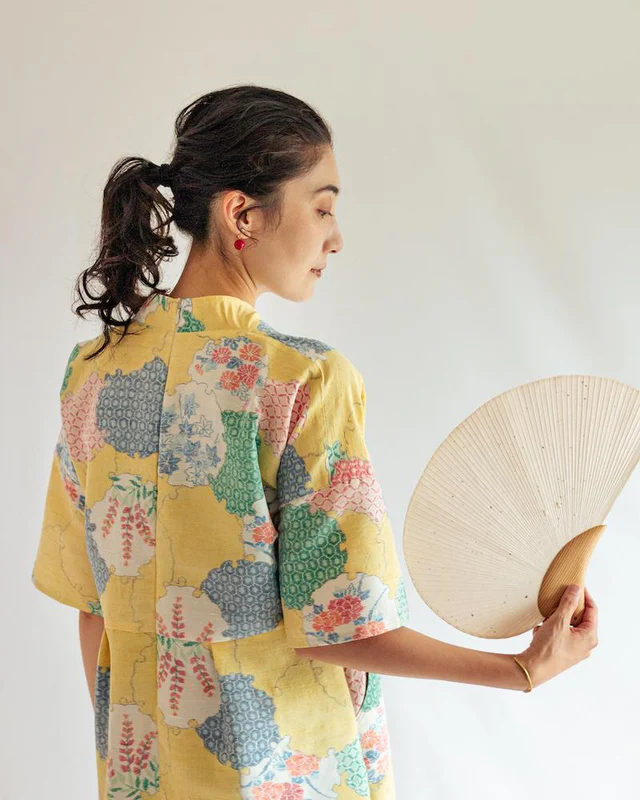
Japanese Traditional Clothing Remake Into New Treasure
Japanese Traditional Clothing Remake Journey
How Kimono Becomes New Treasure
There it is, KIMONO, folded neatly in a wooden drawer, old and ragged. A little stained in KIMONO, but still beautiful.
You slowly unfold it, and the silk whispers in your hands.
You pause and think, “I can’t wear this.
But I can’t throw it away either. What should I do?”
What now? Start thinking about it
A Beginning
This is where the remake begins.
It’s not destruction.
It’s a transformation.
The KIMONO doesn’t disappear. It shifts and becomes something else.
Like something new and something still meaningful.
Because some things don’t belong in storage forever.
They deserve to live again.
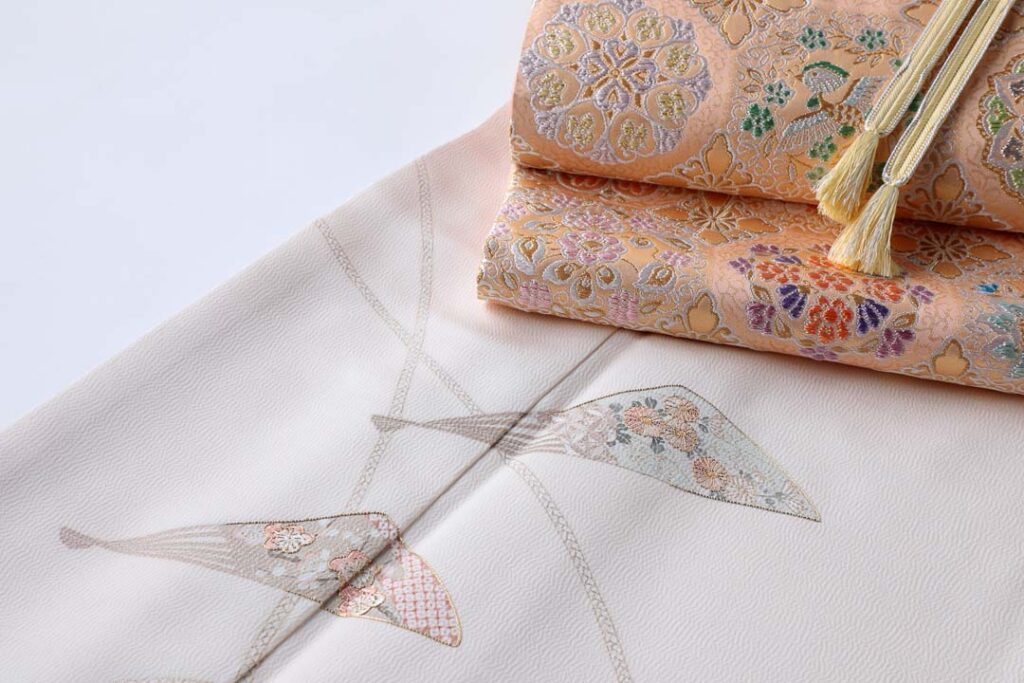
Step 1: The Story Behind the Fabric
First, you listen, because the KIMONO is speaking to you.
Where did the KIMONO come from?
A mother’s wedding day? A graduation? A tea ceremony in spring?
You look at the patterns.
Cherry blossoms show spring.
Cranes mean good luck.
Peonies represent strength and quiet beauty.
You don’t just see the fabric.
You see emotion, the time, and the person.
And that helps you decide: what should it become next?
Step 2: Evaluate with Care
Some KIMONO are too precious to cut. Heirlooms.
But others they’ve been damaged.
Like, faded, worn, too small, or too formal.
That’s okay.
KIMONO doesn’t lose its value when it’s not perfect. It just needs a new path.
So now you check:
- Is the fabric strong enough?
- Can the stains be hidden or trimmed?
- Which sections are the most detailed or the most vibrant?
Even a torn KIMONO has parts worth saving.
Step 3: Finding the Right Form
Here’s where it gets creative.
You don’t need to be a fashion designer. Just be thoughtful and curious.
KIMONO become:
- A wrap dress — graceful, modern, and sophisticated
- A Top – casual, unique, and special
- A jacket — loose, bold, and easy to wear
- A clutch bag — small, powerful memory, and fashionable
- A scarf — something that makes an accent and is flexible, and use every day
- Art — framed, or stretched as a wall hanging
It doesn’t have to be big. It just has to be honest.
What fits your life now? What would bring this KIMONO out of hiding?
4. Work with a Specialist – That’s Us
KIMONO fabric is more than just cloth. It’s memory.
Hand-dyed. Hand-stitched. Worn once for a celebration, or many times, throughout a lifetime. So when it comes to remaking it, it deserves care.
That’s what we do. You don’t have to figure it out yourself. No patterns. No stress.
Just fill out a short form and tell us the story, if you’d like.
We’ll take it from there. We listen and sketch. We’ll match the fabric’s feeling with your vision, or help you find the right one.
Whether you want a top, a bag, a dress, or something totally unique, we’ll preserve what matters most.
We’ll bring it into the present. This isn’t fast fashion. It’s slow.
Meaningful, and it is yours.
Step 5: Respect the Soul
Some people feel guilty when cutting KIMONO. That’s normal.
It was once sacred, after all.
But here’s a thought: Leaving it folded in the dark does not honor it, right?
Giving it a second life. That’s love. Just remember to preserve the heart.
Keep the kamon (family crest) visible, if you can.
Let a piece of the sleeve show in your bag. Or use the silk from the lining as trim.
This is more than just recycling. It’s storytelling.
Step 6: Wear It With Pride
You’ve made something. Now it’s yours, but also theirs, the people who wore it before you.
A shared creation and a timeline stitched together.
When someone asks, “Where did you get that?”
You’ll say, “It used to be my mother’s KIMONO,” or “It came from Kyoto. 30 years ago.”
Suddenly, you’re not just wearing fashion.
You’re wearing history.
From Memory to Modern
We live in a world that moves fast. Trends fade in months. Clothes are tossed after one season. But what about a remade KIMONO? It carries weight. Time and Love.
It says, “I value what lasts.” or “I value stories.” I don’t need to feel new and that’s rare. That’s beautiful.
This Is Not the End of the KIMONO
When a KIMONO is remade, it doesn’t become less. It becomes more. It goes from forgotten to worn. From folded to flowing. From memory to movement.
So if you have one, tucked away in a box and open it. Touch the silk. Feel the thread. Ask yourself, “What could this become?”
Because something this special should never be hidden.